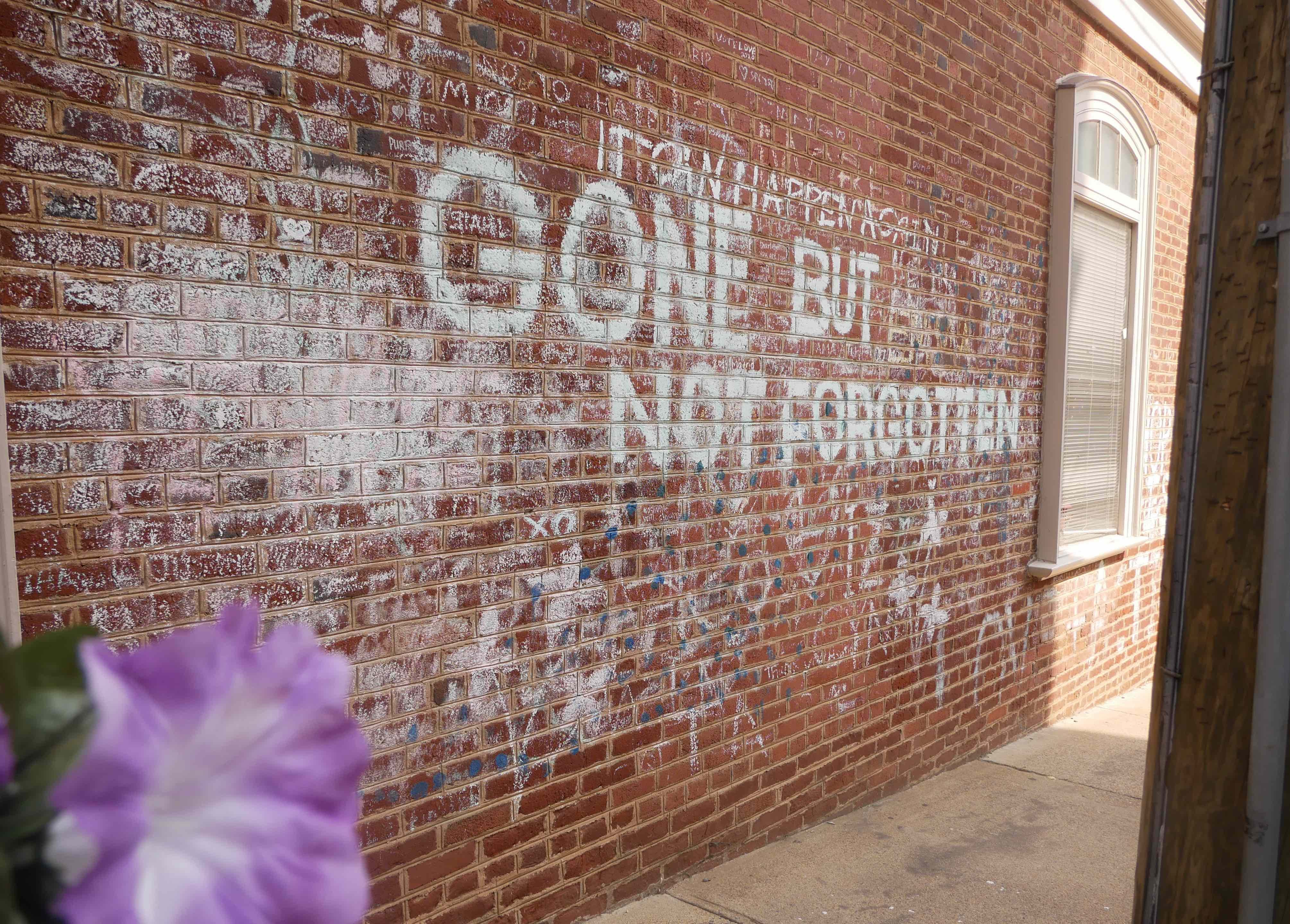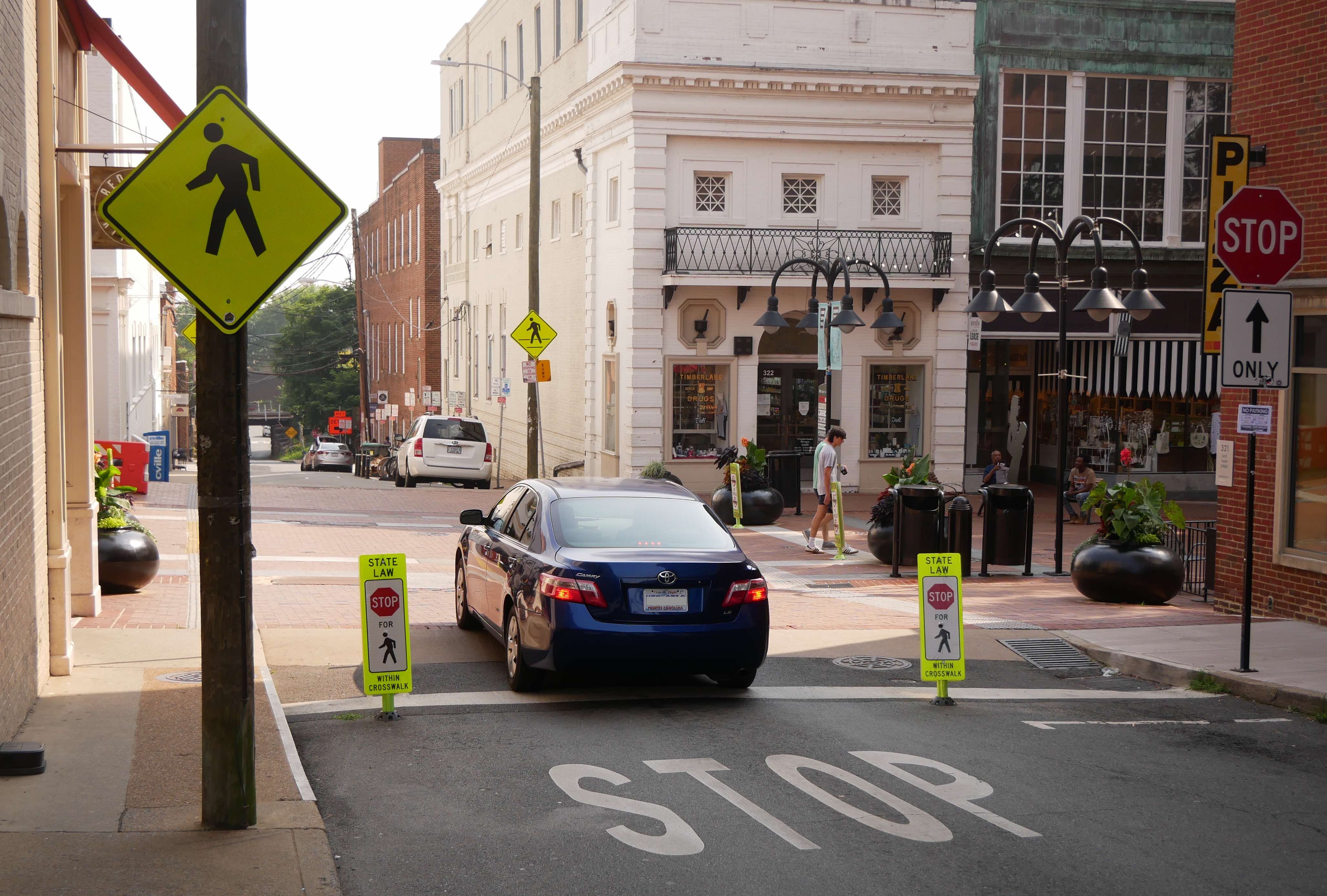
After the 4th Street crossing on the Downtown Mall became a partial memorial to a deadly vehicular homicide during a white supremacist rally in August 2017, the city allocated $100,000 for a Threat & Risk Assessment for the Downtown Mall. It would determine, in part, how potentially dangerous the crossings at 2nd and 4th Street were, and if infrastructure changes needed to be made to protect pedestrians. The threat assessment was phase one of what was being called the “Downtown Mall Pedestrian Safety Project,” a three-phase plan to “identify risks, engineer solutions, and make physical modifications to Downtown Mall access points.”
Of course, you don’t need to be a security expert to know that the access points on the downtown mall have always been vulnerable - check out this video of a driver turning onto the mall from the 2nd Street crossing last year. But the new project represented a shift in city thinking about the crossings, which had historically been about how to accommodate vehicle traffic on the mall, not protect pedestrians.
"We’ve come to understand there are some vulnerabilities on the Downtown Mall and surrounding access points with the bollard designs that are currently place,"said then public works director Paul Oberdorfer, presenting the plan to City Council in May 2018. "They are more visual in nature than anything that would actually protect pedestrians."
How the Downtown Mall almost didn’t get built…
In 1974, when the decision to build the downtown mall came down to a vote between two city councilors (which had to be unanimous), Mitch Van Yahres and Charles Barbour (the other councilors couldn't vote because of conflicts of interest), Barbour voted yes but Van Yahres changed his mind after Harry O’Mansky, who owned The Young Men's Shop (one of the largest businesses downtown at the time) on the corner of Main and Second Street SW (where Christian's is now), complained that the project was going to put him out of business. To sway Van Yahres, the mall project was shortened from seven blocks to five blocks, allowing Second Street to keep running by O’Mansky's store.
The west end of the mall was developed in 1978, a year after O’Mansky sold his shop (which was not ruined), and in 1994 those behind the Regal Cinema and the Charlottesville Ice Park pushed hard to have Second Street reopened, despite strong public sentiment against it. And in 2005, following the closure of 7th Street to accommodate the new pavilion and transit center, the Downtown Business Association pushed to have a second crossing at 4th Street, again against considerable public opposition.
Since then, many intense skirmishes have erupted concerning the mall crossings, the most recent in 2019, when dueling petitions were circulated - one to have 4th Street closed and another to keep it open. Comically, almost, the public debates include those who believe the crossings are unnecessary and very dangerous and those who believe they are essential and completely safe.
Meanwhile, these debates have never led to any major design changes for the crossings, like installing bollards to keep cars from driving down the mall.
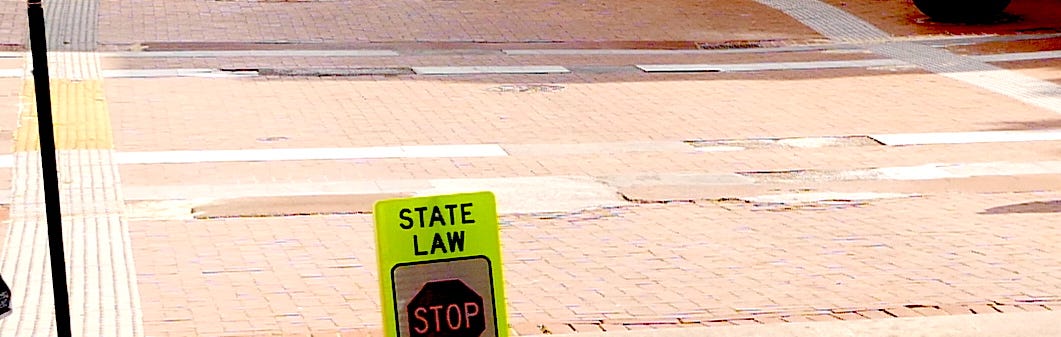
"To my knowledge, nothing's been implemented in the crossings specifically except for those "straight only" signs that don't work prior to the crossing and the yellow signs on the side that are constantly getting knocked down," says City planning commission member Rory Stolzenberg, who also thinks it's worth noting that the actual surfaces of the crossings are in a serious state of disrepair, as vehicle weight, and a design that wasn't conceived to accommodate vehicle traffic, is mangling the bricks.
"A bunch of concrete has been put down over the runnels to try to fix that issue, but there are still gaping holes in parts," says Stolzenberg.
Downtown Mall Pedestrian Safety Project gets nixed
The results of the threat study were completed in October 2018, but they were never shared with the public. In August 2019, the city spokesperson at the time, Brian Wheeler, said the city manager at the time, Tarron Richardson, was going to make a presentation and present recommendations to Council based on the threat study, but that never happened.
According to Oberdorfer, who is now city manager of Piqua, Ohio, specifics of the study were shared with council members in executive session only. “Unfortunately, the study has public safety considerations that do not allow for publication,” he says.
However, the study prompted the city to move forward with the Downtown Mall Pedestrian Safety Project, which was included in the proposed budget draft in 2020, calling for over $2.5 million to be spent over three years on public engagement, engineering plans, and construction.
"It’s an outcome of the threat and risk assessment that was conducted in 2018," Oberdorfer told City Council at the time.
But the Downtown Mall Pedestrian Safety Project also never happened.
"The direct proximate cause was Covid," recalls Stolzenberg. "It was proposed in the March 2020 budget draft to Council but then nixed in the May 2020 draft along with basically every nonessential item."
Some in city government, including Stolzenberg, believed the costs for such reports and studies were excessive, despite the pandemic. And Mayor Nikuyah Walker and Councilor Mike Signer voted against approving the $100K study back in 2018 for that reason, with Signer saying he worried the city might be getting bilked by security firms “playing on fears.”
It’s unclear exactly why the downtown mall safety plan was nixed, but anticipating severe financial losses during the pandemic, Richardson called for deep cuts in that year's budget, a decision that ultimately led to a lot of internal conflicts. At the same time, a new City Council had just taken over in January and was tasked with governing during a pandemic. Richardson ended up resigning in September, and by the end of the year, Charlottesville’s city government was in a full-blown leadership crisis.
The last thing on anyone's mind was a threat and risk assessment study for the downtown mall crossings. Flash forward to 2023 and no one seems to remember the project at all.
"I have never seen any document from 2018," says Charlottesville Mayor Lloyd Snook, who joined city council in January 2020. "And I am not aware of any recommendations from any threat assessment from any 2018 study. I vaguely remember a mention of a threat assessment in some drafts of the capital program in 2020, but I don't remember why it got removed."
Threat Assessment report remains secret
I recently filed a Freedom of Information Act (FIOA) request for information about the 2018 Threat Assessment report, curious about how dangerous the security experts believed the crossings to be. Jeremy Evans, the city's emergency management coordinator (a position created last year), wasn't aware that such a report existed, but quickly tracked it down.
"Since this report is confidential, I can't divulge specific details in the report," Evans said, citing exclusions concerning safety plans in Virginia's Freedom of Information Act (FIOA). However, Evans said there were several areas evaluated and determined to be the most likely risks or incidents to occur on the Downtown Mall.
“Examples of these risks were crime, mass gatherings, vehicular threats, and natural hazards,” said Evans. “In speaking with current City staff who were working during this timeframe, many of the security recommendations listed in the study were implemented.” But he wouldn’t say what specifically was implemented.
So, what did the threat study in 2018 say about the mall's vehicle crossings? What did it recommend? How dangerous are the mall crossings according to security experts?
While the city won't divulge specifics, the threats were enough to prompt that $2.5 million design/build proposal in 2021. And the frequent closure of 4th Street during select events on the mall, when Parks and Recreation staff put up gates and park their trucks across the street to prevent access, remains a tacit recognition of those threats.
Last year, in anticipation of the mall's 50th anniversary, interim city manager Michael Rogers established a Downtown Mall Committee, made up of various downtown stakeholders, to discuss the “preservation, maintenance and security of the downtown mall.” Though no meetings are listed on the Committee’s web page, Rogers has indicated during council meetings that the group has been meeting, and Stolzenberg says there’s one coming up on July 6.
"The next meeting is about the side streets and crossings, as I understand it, so there'll probably be a vigorous discussion then," he says.