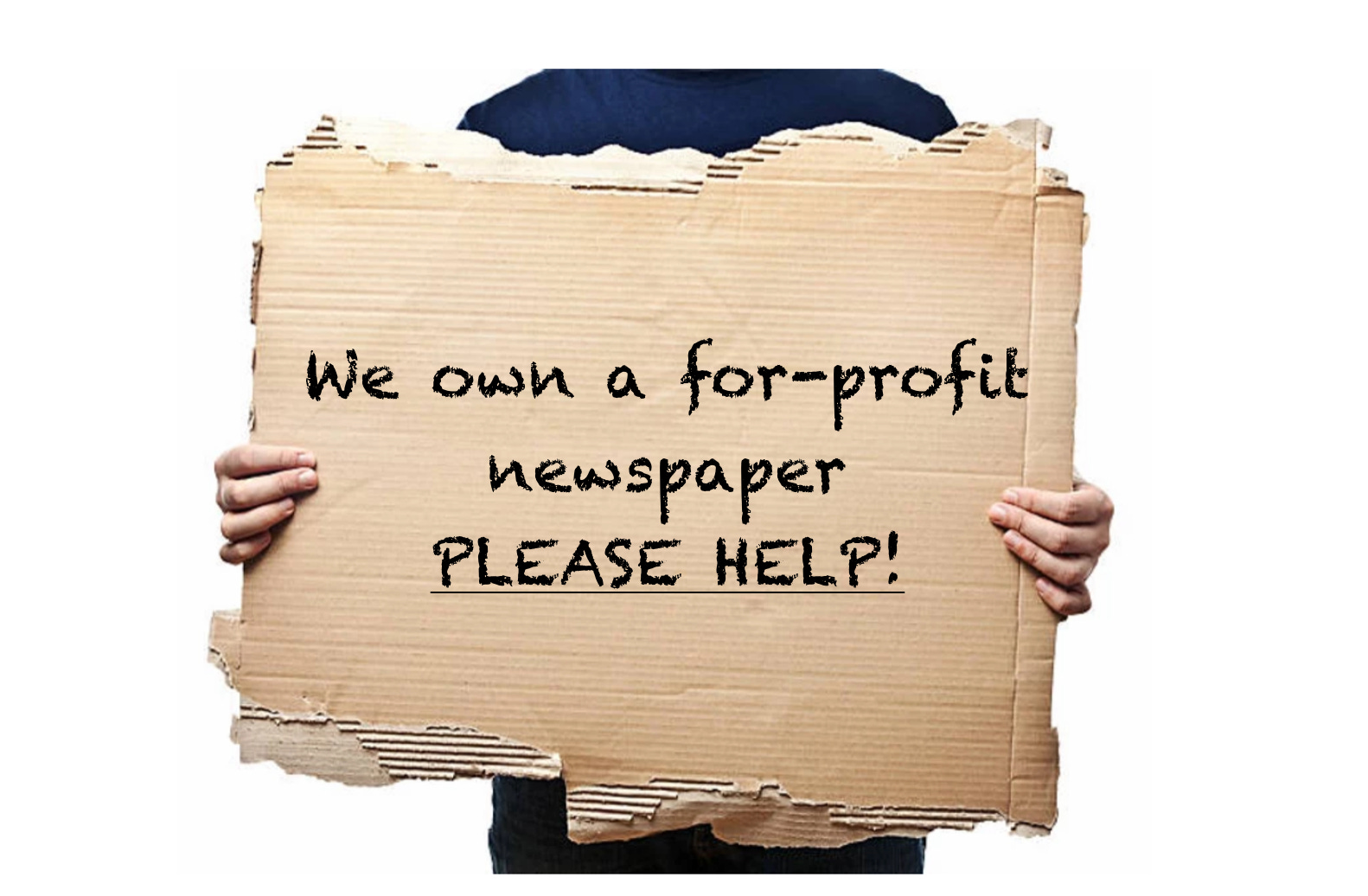
CVILLE's ASK
After 36 years as a for-profit weekly newspaper, C-VILLE started asking for donations. So, what's the plan?
C-VILLE Weekly, which has been a free, for-profit newspaper for 36 years, recently began asking for donations. It started during the pandemic and last year they launched an official fundraising campaign called Save the Free Word. As the campaign reveals, its cost $26,245 to produce a single issue of the paper, and while the $20K they raised last year was a good start, they’ve got a long way to go. By comparison, the non-profit news website Charlottesville Tomorrow raised over $1 million through donations and grants in 2023, according to tax filings, and CEO and Editor-in-Chief Angilee Shah says they are on track to continue that trajectory.
Still, it’s remarkable that so many people having been willing to donate to C-VILLE Weekly. So far this year, they have raised just over $26K from 381 donors, including one personal donation from Shah.
“I think it is vitally important that central Virginia has a rich information and news ecosystem,” she explained.
Last month, C-VILLE Weekly took another step in their solicitation journey by entered into a partnership with the Alternative Newsweekly Foundation, which serves as a fiscal sponsor to allow donations to be tax-deductible. The Foundation takes a seven percent cut for every transaction.
Now, all this might all seem hard to understand for some people, given that that “one of the richest guys in town” is an investor in the C-VILLE’s parent company, according to their own reporting, and that another owner lives in a $3 million home outside of town. But C-VILLE editor Caite Hamilton says it’s part of a plan to remain in business for the long haul.
“Like many independent newspapers across the country, we’ve realized that surviving on advertising alone just isn’t sustainable—not if we want to be here for another 36 years,” says Hamilton. “We explored partnerships with other news outlets and even considered converting to a nonprofit ourselves, but each option came with trade-offs, especially when it came to keeping the distinct C-VILLE spirit intact.”
While Hamilton wouldn’t say which news outlets they explored partnerships with, she says they “came with compromises we weren’t comfortable making.”
That “distinct C-VILLE spirit,” Hamilton says, goes back to its founding in “the roaring ’90s, as co-founder Bill Chapman likes to say, when the paper was scrappy and irreverent. We’re a more mature outfit now, but that ragtag energy still drives us: curious, skeptical, a little playful, and deeply rooted in Charlottesville.”
Of course, suddenly justifying its existence for readers, which is business as usual for non-profit news organizations like Charlottesville Tomorrow, is an awkward pivot for C-VILLE. Historically, its ownership hasn’t shown much of an interest in touting itself as a defender of local journalism. In an interview last year for the paper’s 35th anniversary issue, co-founder Chapman mentioned nothing about the importance of local journalism, other than to say they “published a pretty good … summary, I’ll call it, of the August 12 riots.” Of course, some great stories have been written by C-VILLE reporters over the years, and fortunately that same anniversary issue featured a number of them calling attention to that.
Asked about The Hook, a rival weekly founded by his C-VILLE co-founder Hawes Spencer, which he would end up co-owning, Chapman recalled that the paper — which won numerous Virginia Press Associations awards, including the state’s top journalism prize three times — had “like one good year financially” and that advertisers “were actually relieved when we killed The Hook because it simplified their decision-making.” What’s more, as revealed in a 2022 Washington Post story, Chapman and his fellow C-VILLE owners sold the Hook’s storied website and news archive to an anonymous buyer, no questions asked, who then shut it down. The Hook’s story archive has yet to be permanently restored.
Now C-VILLE is sending out fundraising emails asking readers to “protect local journalism.”
Of course, you might think that C-VILLE is doing this now because the paper is in financial trouble. Hamilton says that’s not the case.
This is “not a last-ditch effort to save the paper,” she says, but rather a way to “strengthen the foundation of the work we’re already doing.”
“The fiscal sponsorship helps us plan for growth rather than just survival,” she says. “It’s not about hitting a specific number—it’s about building a healthier, more resilient business model for the next five, ten, or thirty-six years.”


