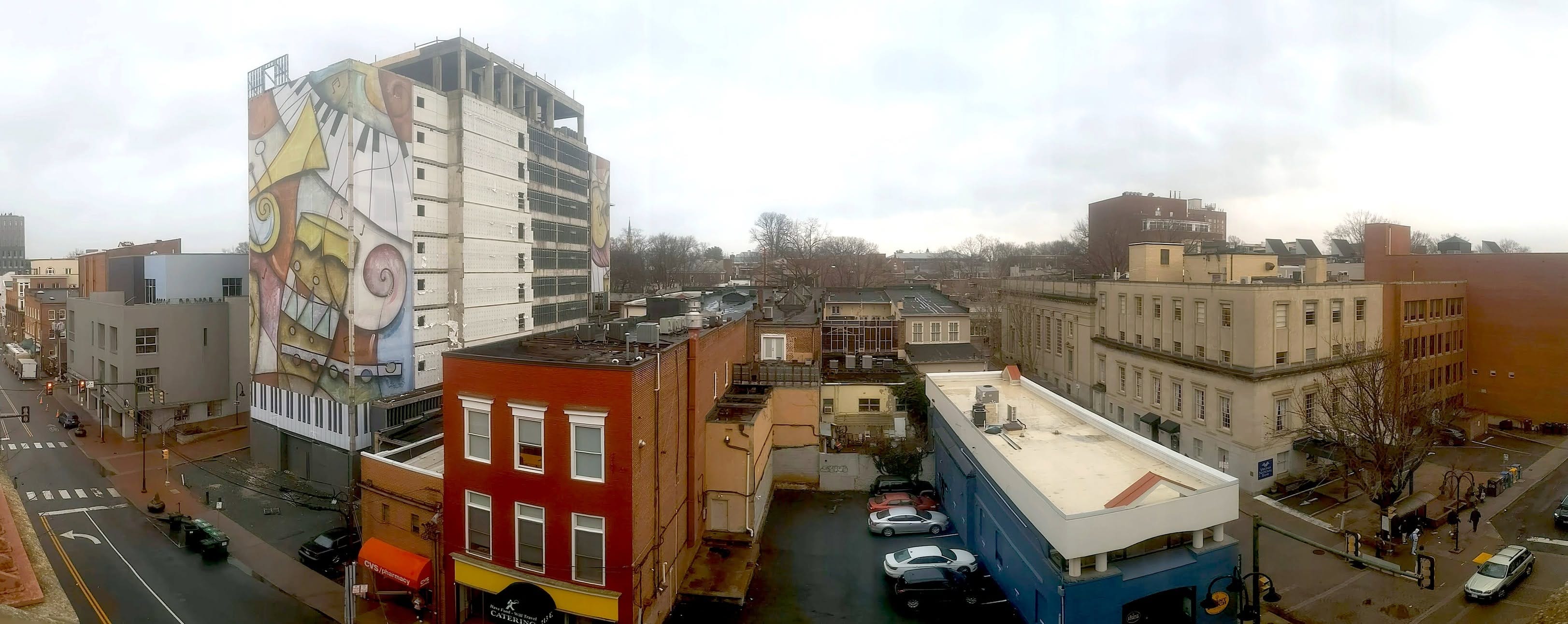
The City has announced a new effort to compel developer John Dewberry to either finish or sell the unfinished hotel project on the Downtown Mall he bought at auction in 2012, and that has sat unfinished for over 18 years. The effort follows a similar one by government officials in Atlanta to compel Dewberry to finish another long-abandoned building project, and they recently voted to use the city’s blight tax to significantly raise the amount of property tax Dewberry will have to pay. Charlottesville isn’t going that far…yet.
“The unfinished Dewberry project has been a scar on downtown for far too long,” said City Manager Sam Sanders. “The City continues to believe the best outcome would be for the owner to sell the property to someone ready, willing, and able either to finish the building or remove the existing shell and start over. What we are no longer willing to accept is an indefinite continuation of the status quo.”
City Attorney John Maddux has sent a letter to Dewberry giving him 60 days to come up with a written plan for the property, identifying:
Whether the owner intends to complete the building, sell the property, or remove the existing structure;
Specific milestones and target dates for that course of action, including anticipated permit or site plan applications; and
Interim measures to secure and maintain the site and improve the exterior, including plans for the weathered vinyl wrap.
The City will also perform a new inspection and structural evaluation of the property, which hasn’t been done since 2017, to determine its structural integrity. Absent any action from Dewberry, the City says it will “evaluate tools available under Virginia law, including the Virginia Uniform Statewide Building Code and provisions addressing unsafe, derelict, blighted, and nuisance structures.”
However, as City Councilor Lloyd Snook pointed out in a June 20 story in the DTM, applying a blight tax is something council doesn’t have the legal authority to do in Virginia.
“We can’t tax property on the basis of what is planned — only on the basis of what it is actually worth right now,” he says. “ And at the moment, the fact that it is a half-built shell is actually holding the market value down, and therefore holding down his taxes.”
As for taking action against Dewberry based on the condition of the building, Snook says the city “looked with some energy” at the question of whether Virginia law authorized them to take such action a few years ago.
“The problem was that the Dewberry didn’t fit the definition in the Code of “blighted” or “derelict,” he says.
“The structure has certainly been vacant, and it is boarded up, and while I think that it is connected to electric and water utilities, I don’t know,” says Snook. “Most importantly, though, it is not a danger to the public’s health, safety or welfare, again because it is not falling down.”
Actually, last year, Charlottesville’s Utility Billing Manager Richard Palumbo told me that the city didn’t have an existing utility account for the Dewberry property.
City Councilor Michael Payne sees things differently.
“I think we should learn from Atlanta and pursue a blight tax. And if authority doesn’t currently exist to implement that within Virginia, we should request authority from the General Assembly,” he says. Likewise, Paynes says the city shouldn’t abandon the previous effort to declare the property blighted.
“There is a legitimate basis for considering the unmaintained property a threat to health and human safety,” says Payne, “ given the large rat population and that seemingly no monitoring is taking place to know who might enter the structure, or what damage could have been done to the skeleton of the building.”
“We want to see this property become an asset to downtown and to the community,” Sanders said. “We are giving the owner an opportunity to show us a realistic path to get there. If that does not happen, the City is prepared to evaluate the appropriate next steps available to us.”


